Bilbao - capital of the Basque Country.
Let's start with history. Where did the Basques come from? The simplest way to explain it is this: they were already here. Most of the peoples who created the Roman, Greek and Slavic civilizations migrated to Europe from Asia several thousand years ago. At that time, the Basques were already living in the north of the Iberian Peninsula. That's why their language is so different from all the others we know. And that's why they still cultivate it.
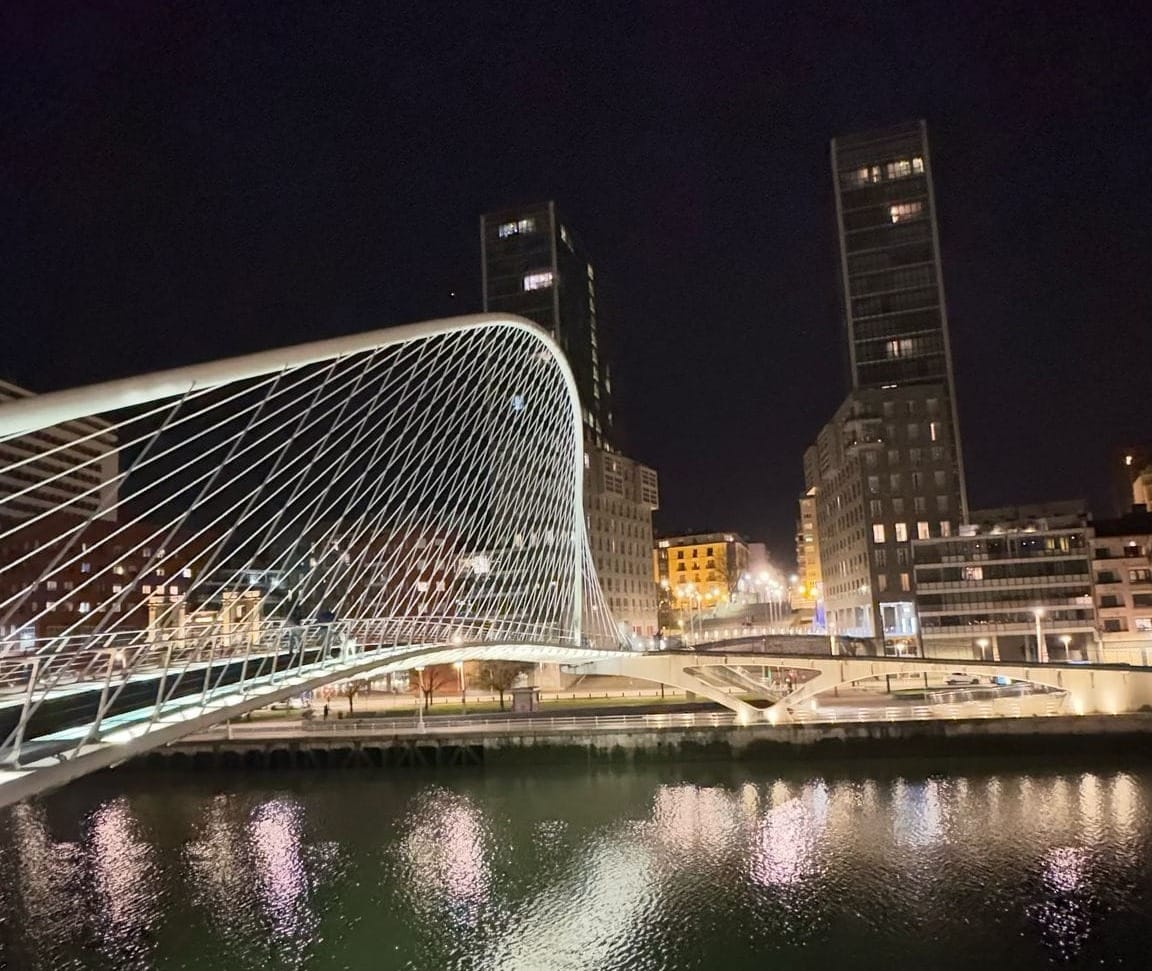
The city is incredibly coherent in its multidimensionality. We have skyscrapers, modern buildings, futurism with the Guggenheim Museum at the forefront, old tenement houses, lots of greenery and classical sculptures. Despite this, we do not feel cognitive dissonance - on the contrary, the city is very coherent, as if all these elements were arranged by one person.
The city lives until late, cafes and bars are open until midnight, but at the same time it is not noisy, irritating, or tiring. During the day, Bilbao is full of people but there is no rush like we see in Warsaw, Milan or Madrid.
If I had to mention three things that charmed us the most in the Basque Country, they would be:
- Cleanliness. This is not Paris full of homeless people, not Naples regularly struggling with the problem of waste collection, not beautiful but messy Madeira.
- Culture. The world is full of minorities. In Spain we still have Catalans, in Poland Silesians and Kashubians, in Germany Bavarians, and in Ukraine the inhabitants of Zaparpacie. With their own dialect, accent and words. But the Basques and their euskara [Basque language], which we see in the names of streets, buildings, premises and companies, on signs and road signs, which we hear in cafes... is something extraordinary.
- Landscape. Euskal Mendiak, a range that is part of the Catabrian Mountains, is an orgasm for the eyes.